Black Friday used to be a day. Now it is a season that starts before Thanksgiving week and runs past Cyber Monday, with shoppers who know a real deal when they see one.
Below: what the 2025 numbers show, what we saw in the stores we work with, and the playbook we use to make the most of it. Our own client numbers are in The Control Room at the end.
Executive summary
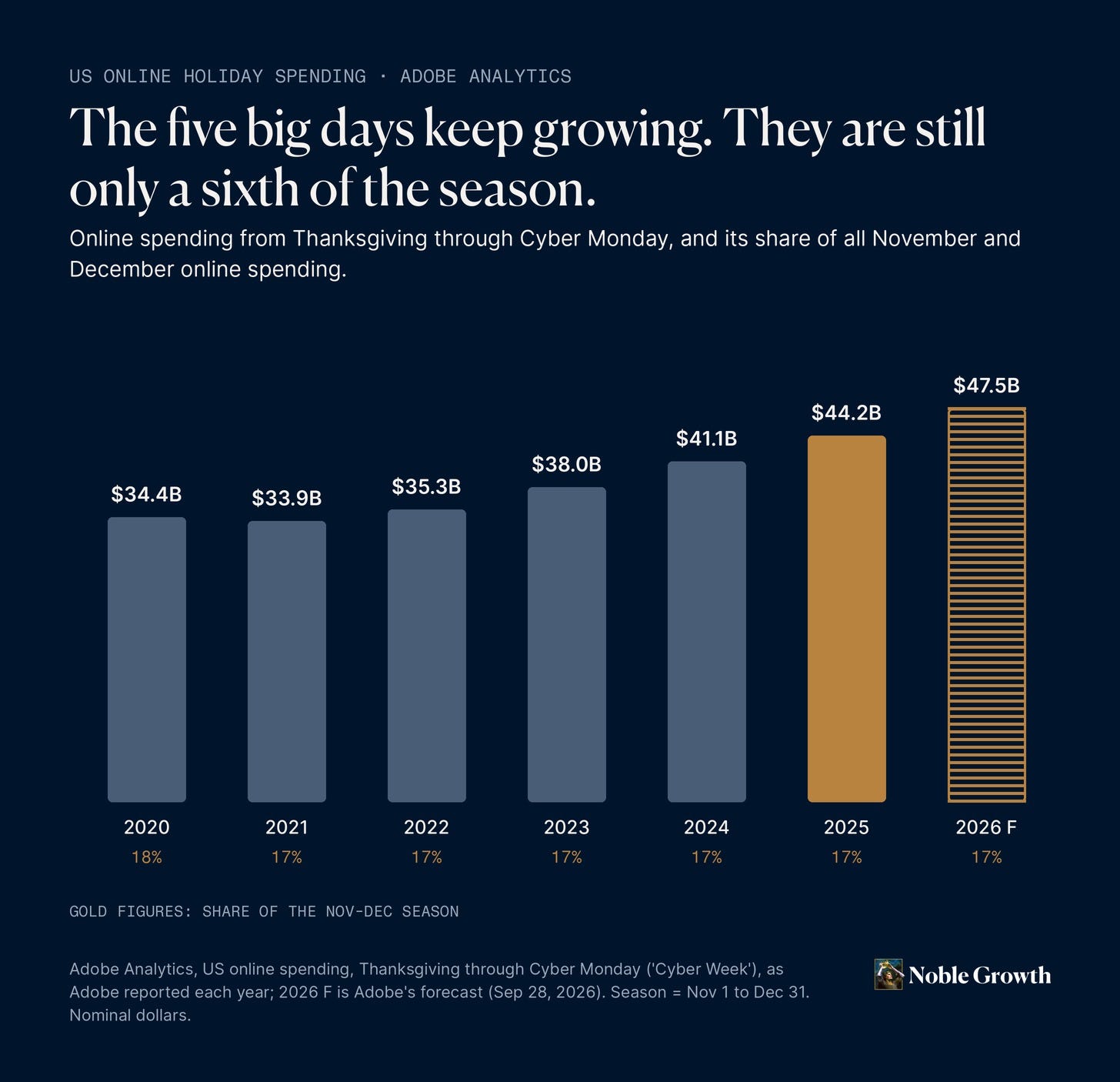
The five big days are about a sixth of the season. Thanksgiving to Cyber Monday was 17% of US online holiday spending in 2025.
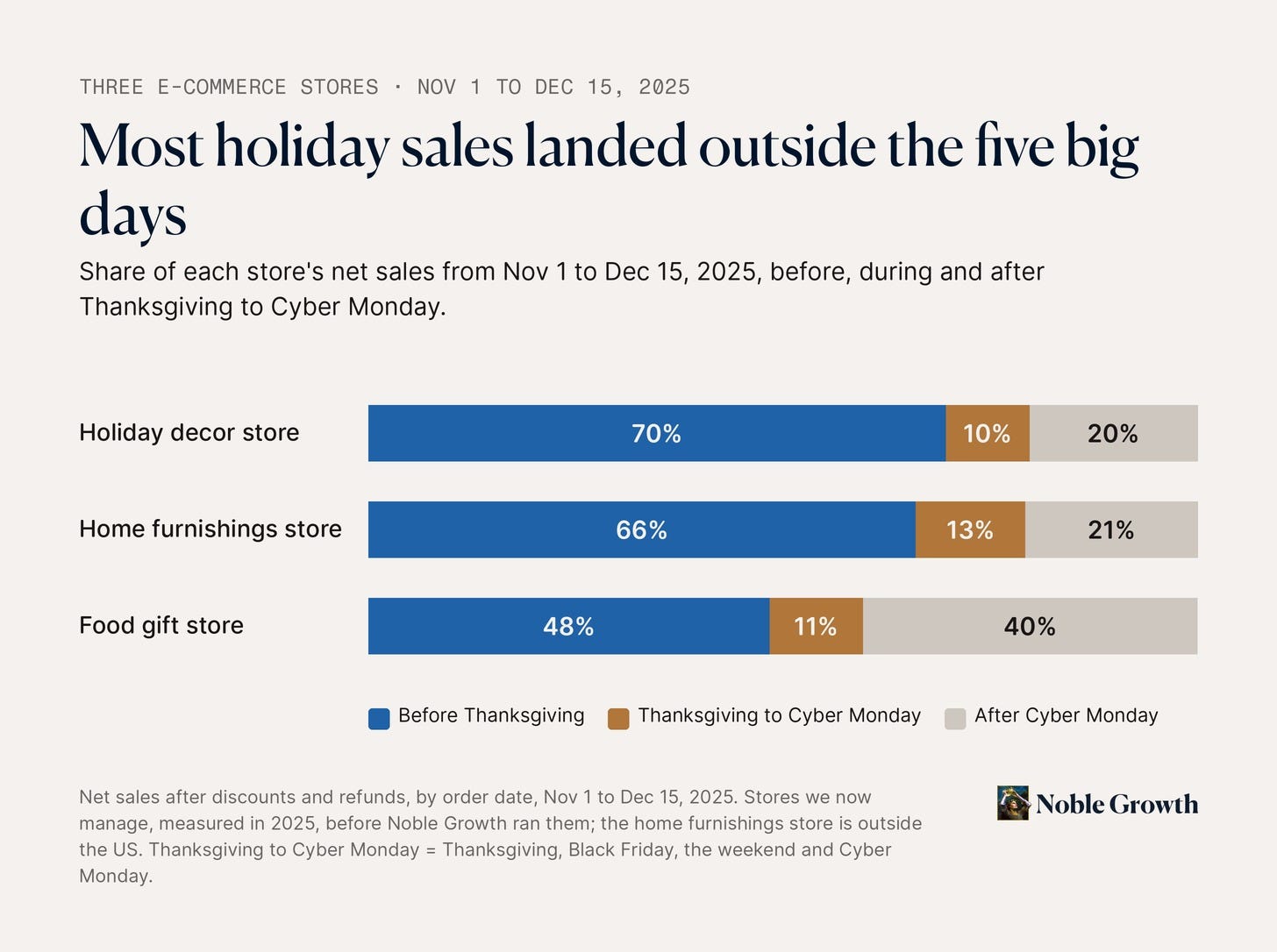
Most sales land around them. In three stores we now manage, 48% to 70% of holiday sales came before Thanksgiving, and 10% to 13% in the five days.
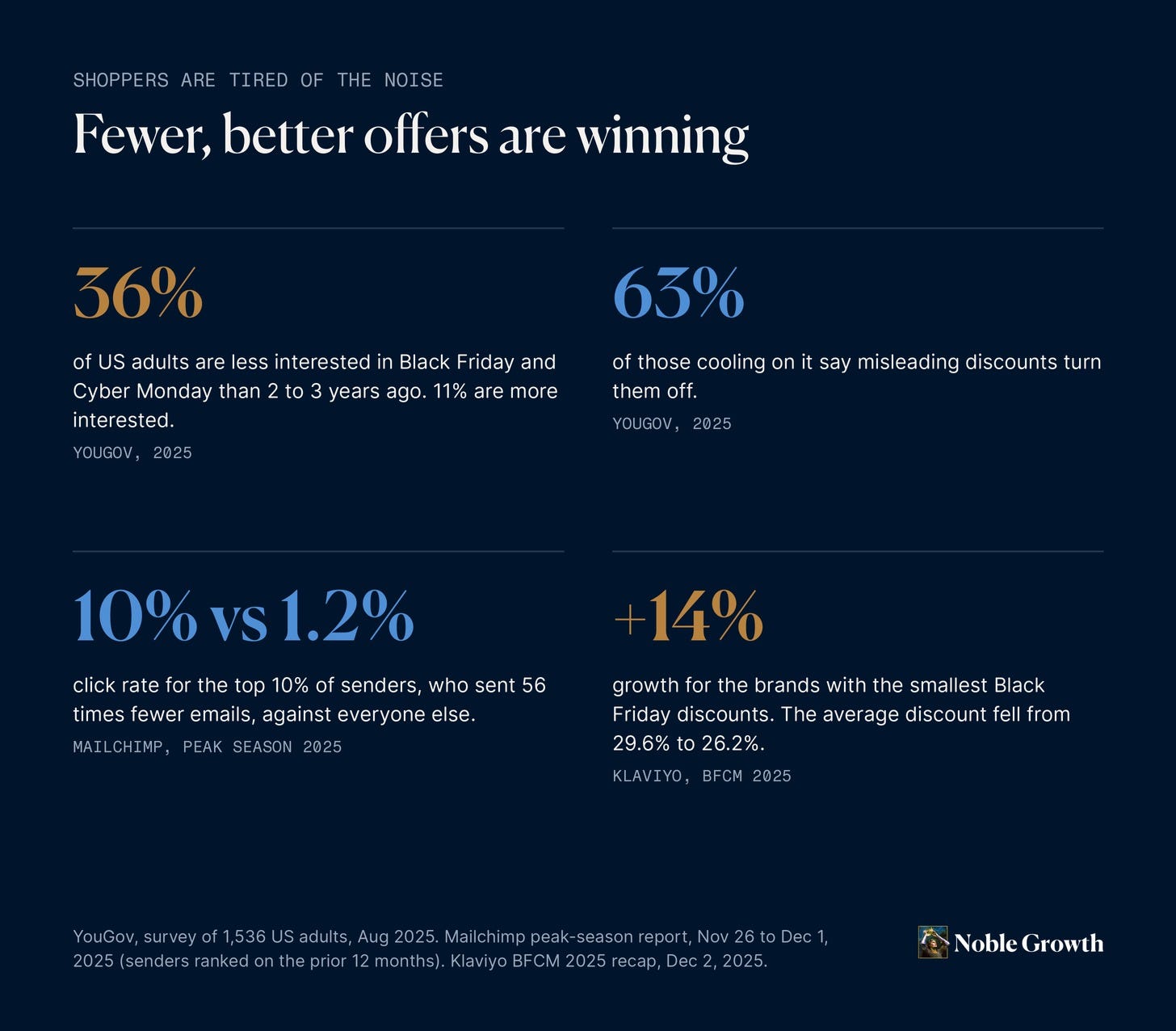
Shoppers are tired of the noise. 36% of US adults are less interested in Black Friday and Cyber Monday than a few years ago. The top email senders sent 56 times fewer emails and earned 10% click rates.
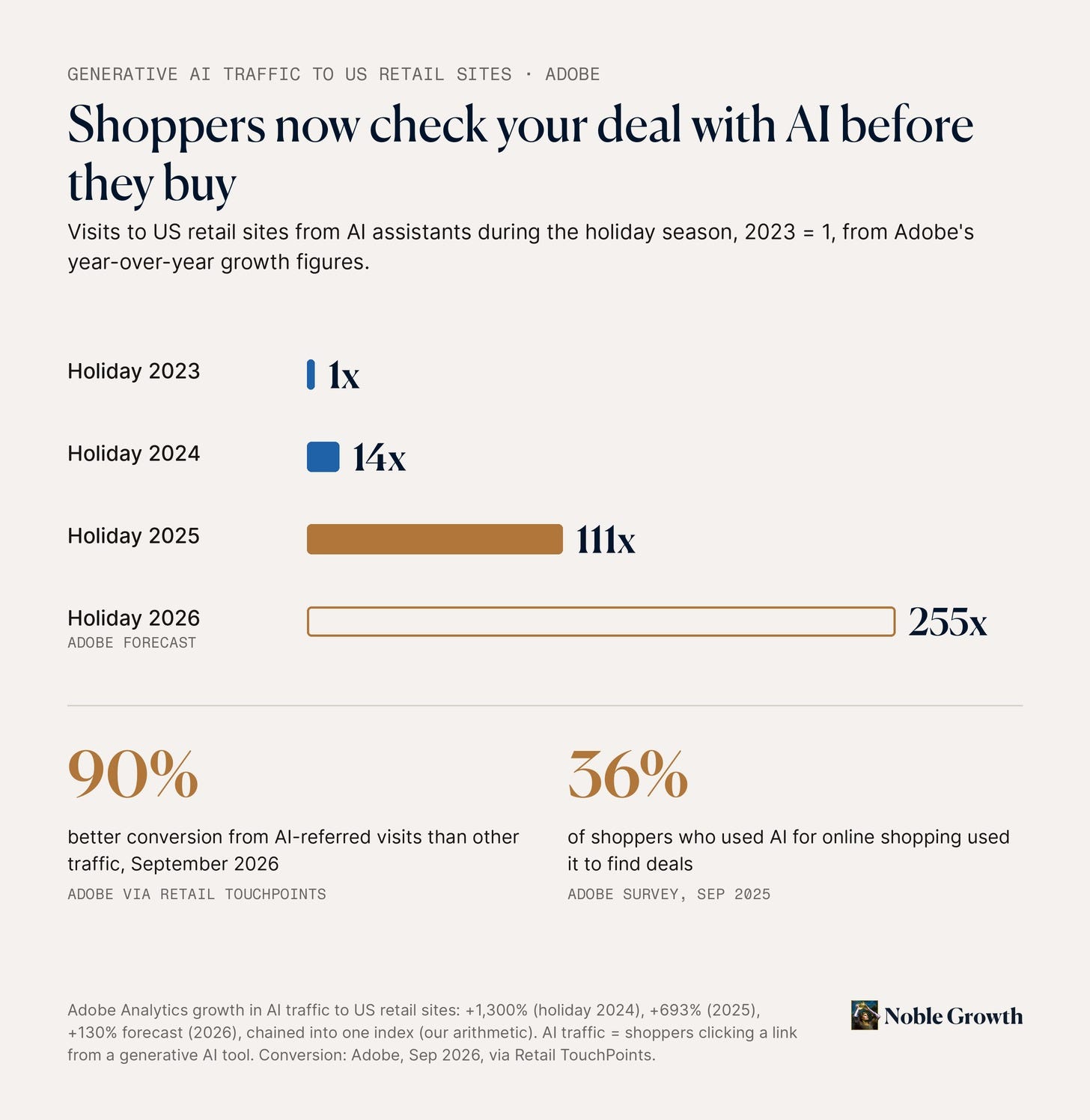
They check your deal before they buy. AI traffic to US retail sites grew 693% last holiday season.
What works: start early with your best customers, add something new at each step, and end exactly when you said you would. One client doubled its Black Friday sale in two years after opening early for past buyers.
Is Black Friday still a day?
Not anymore. Adobe counted 25 days last season with more than $4 billion in US online spending, up from 18 the year before. The five days from Thanksgiving to Cyber Monday still set records, $44.2 billion in 2025, but they were only 17% of the $257.8 billion season. Adobe forecasts the same share this year.
Our own stores look the same. Across three e-commerce stores, measured before we managed them, 48% to 70% of sales from November 1 to December 15 came before Thanksgiving. The five big days brought 10% to 13%. For the food gift store, 40% came after Cyber Monday.
When do shoppers start now?
Sales start earlier every year. During Amazon's two-day October sale event, US online spending across all retailers reached $9.86 billion, Deloitte found 1 in 4 shoppers had already bought holiday items during June promotions, and Adobe expects discounts of up to 14% in early November, 21% just before Thanksgiving and 30% in Cyber Week.
Shoppers browse early but save the big purchases for the deal they trust. NRF found 64% plan to wait until Thanksgiving weekend for most of their holiday shopping, up from 51% five years ago. So open early for the people who already love you, then make the main event worth the wait.
Why does Black Friday feel noisier every year?
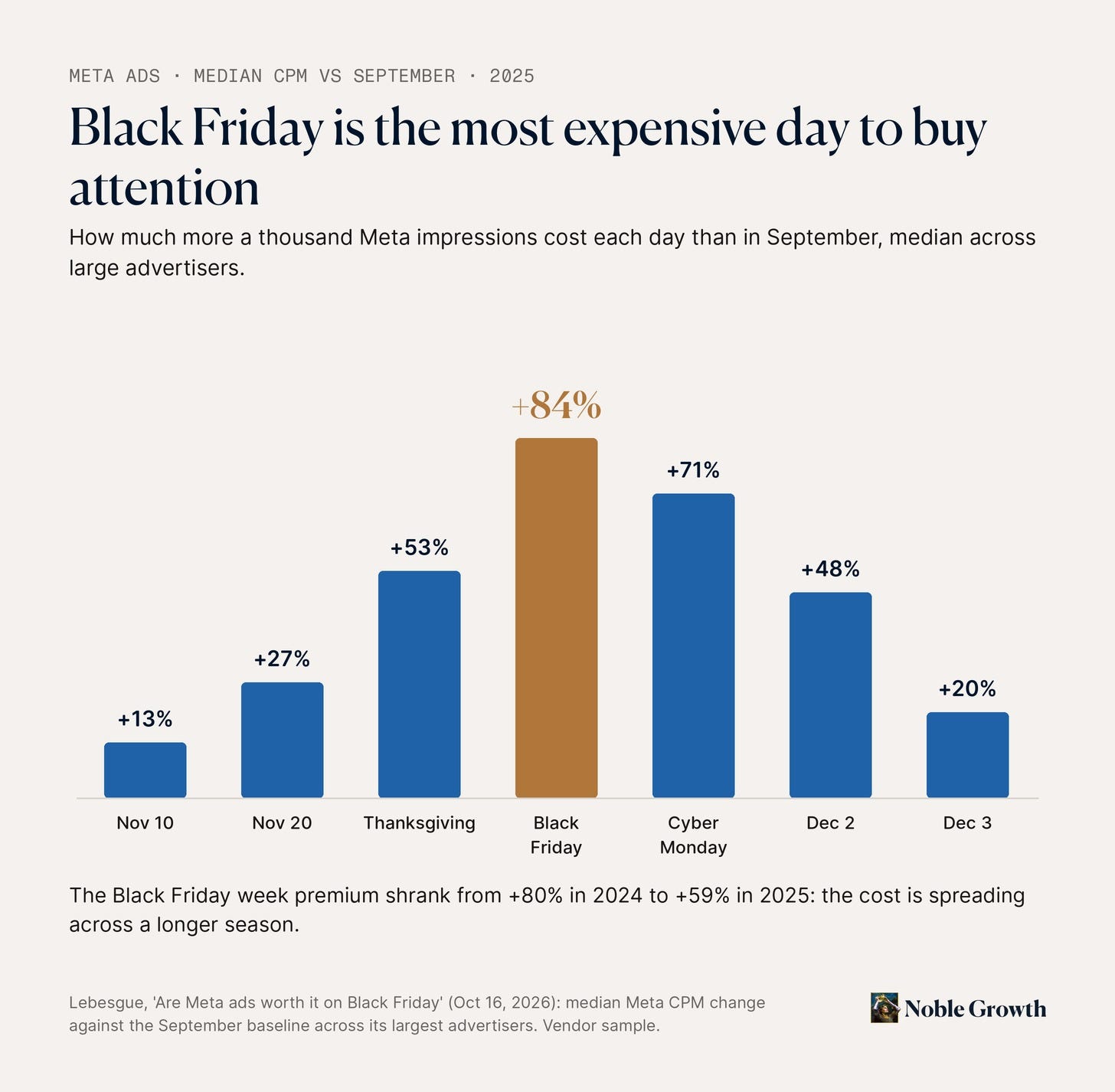
Because it is. Meta's median cost per thousand impressions ran 84% above September on Black Friday 2025, according to Lebesgue's advertiser data. Every brand is shouting at once, and attention costs the most on the day everyone picks.
Shoppers notice. YouGov found 36% of US adults are less interested in Black Friday and Cyber Monday than two or three years ago, and 63% of them blame misleading discounts. The brands that cut through sent less: in Mailchimp's peak-season data, the top 10% of senders by click rate sent 56 times fewer emails than everyone else and averaged 10% clicks against 1.2%. And in Klaviyo's BFCM 2025 data, the brands with the smallest discounts grew the most, 14% year over year.
How are shoppers checking deals now?
With AI. Visits to US retail sites from AI assistants rose 1,300% in the 2024 holiday season and 693% in 2025, and Adobe expects another 130% this year. Of shoppers who used AI for online shopping, 36% used it to find deals.
Anyone can now ask an assistant when a brand usually runs its sales and whether this year's price is really a deal. A brand that marks prices up before marking them down, or runs the same "final" sale every month, gets found out. BCG found 77% of shoppers at least sometimes hold off on purchases during the year to wait for year-end deals. Constant discounting teaches customers to wait.
How should brands run Black Friday in 2026?
Here is the playbook we use with our clients.
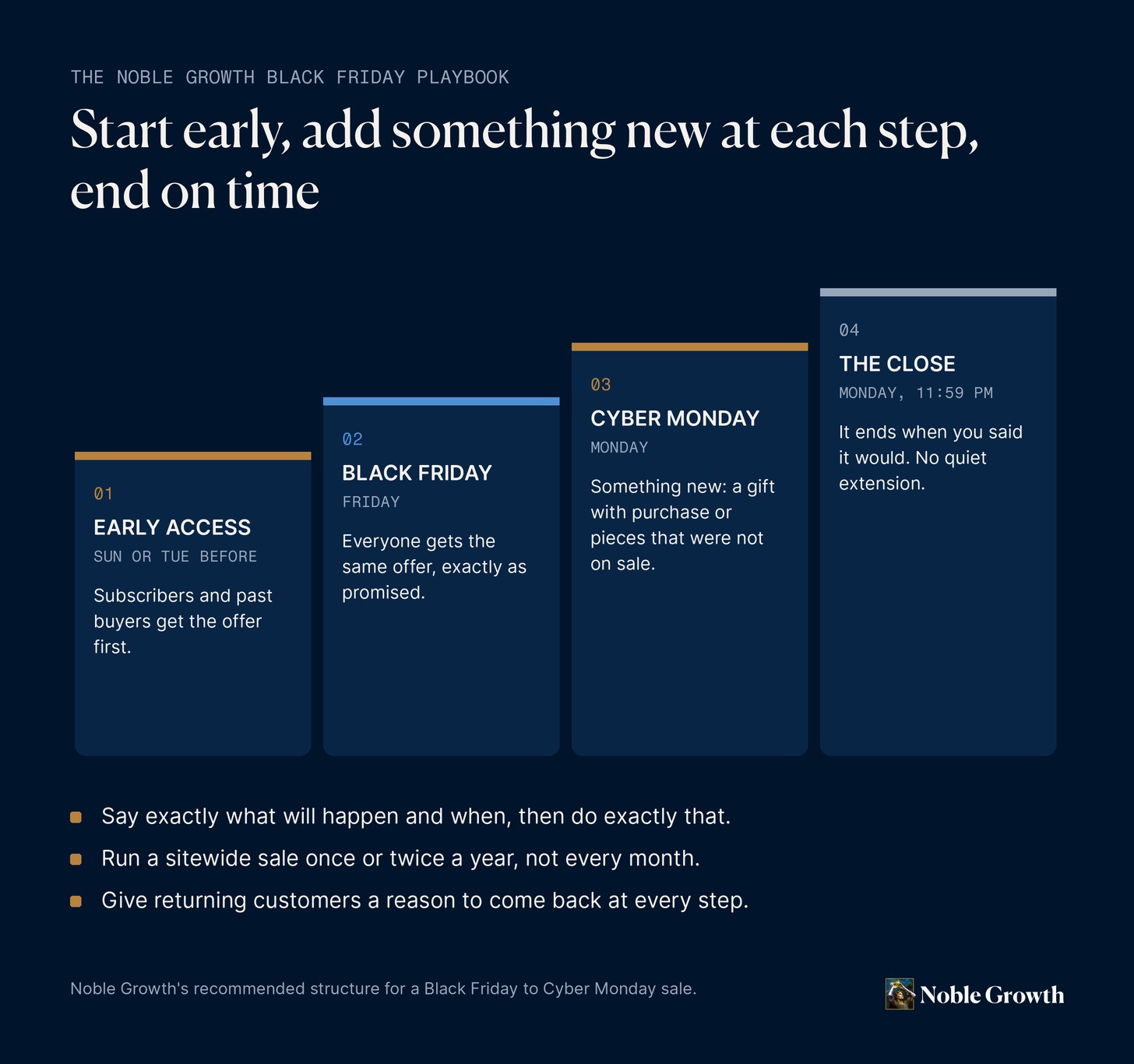
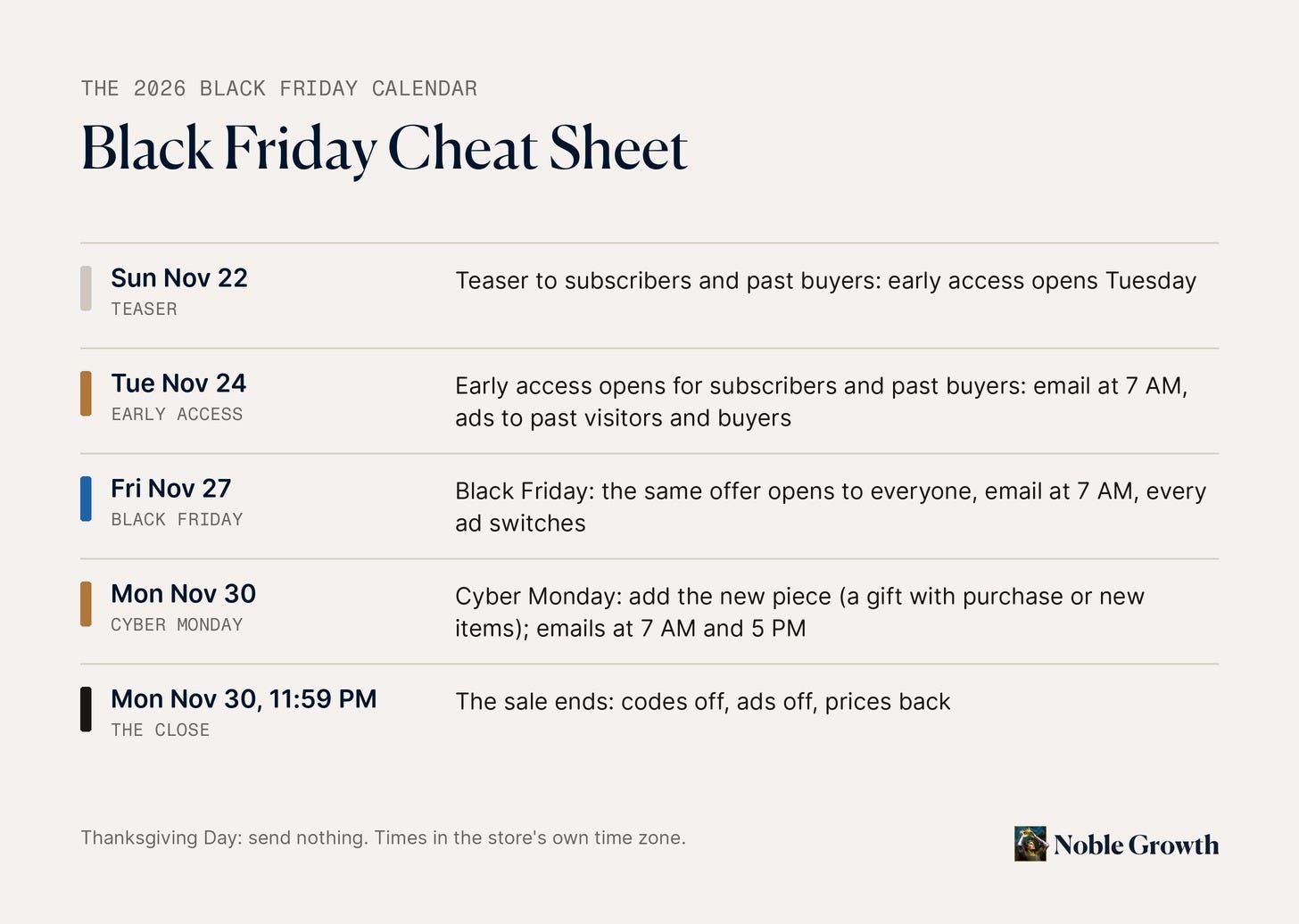
Start early, with the people who already know you. Early access for subscribers and past buyers on the Sunday or Tuesday before Black Friday. They feel rewarded, and you spread demand over more days.
Do exactly what you say. Name the offer, the dates and the end time, then keep to them. A shopper who learns your deadlines are real buys before they pass.
Add something new at each step. Early access gets it first, Black Friday opens it to everyone, and Cyber Monday adds something that was not there before: a gift with purchase, or a few pieces coming on sale for the first time.
End on time. No surprise extension. The deadline day is often the biggest one, as long as shoppers believe it.
Use sales sparingly. One sitewide sale around Black Friday and perhaps one in spring. Full price the rest of the year is what makes the sale mean something, and keeps customers from waiting for the next one.
The Black Friday cheat sheet
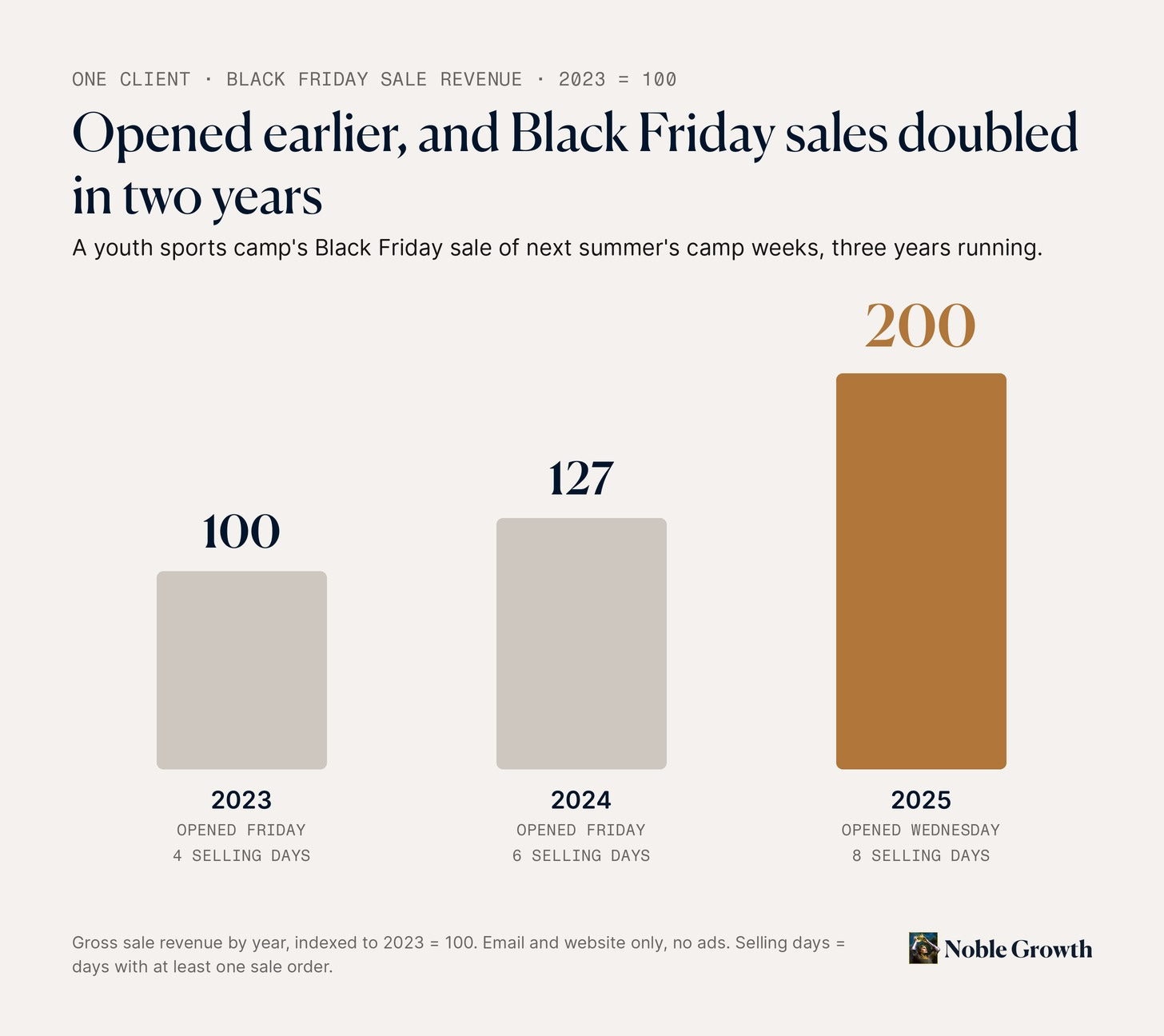
One client, a youth sports camp that sells next summer's camp weeks at Black Friday, went from 100 in 2023 to 200 in 2025. The biggest change in 2025: the sale opened two days early, on the Wednesday before Thanksgiving, for the families who had come before. In 2025, 33% of the sale came before Black Friday, and refunds fell from 24% to 8% of sales.
Is your brand ready for the season?
Ask ChatGPT or Claude what your brand's best deal of the year is and when you usually run sales. If the answer is vague or wrong, so is what your shoppers hear. The free AI Visibility Score shows how the assistants read your brand today.
For the full picture, Mission Control maps your sales calendar, email, ads and site against the numbers above and builds next year's plan: early access, the steps, the close, and full price the rest of the year. Book a fit call there and we will show you where your brand stands. And next Tuesday: what Google Ads cost in 2026, following what Meta ads cost.
Everything below this line is for paid subscribers: the numbers from our own clients.